There is no doubt that high fat diets which raise the blood cholesterol levels play an important role in disease of the arteries (atherosclerosis). It is, therefore, important to pay attention to the choice of foods. A “desirable” diet is one which restricts foods high in saturated fats – meat,meat … Should I have a special diet?Read more
What can be done to minimise the chance of an operation?
The first thing to do is to stop smoking. There is absolutely no doubt that this is by far the most important factor. About 97% of patients with peripheral arterial disease have been dedicated cigarette smokers for more than 20 years. Doctors used to think that the damage had been … What can be done to minimise the chance of an operation?Read more
What should I do if I suspect that I might have peripheral arterial disease?
If peripheral arterial disease is suspected it is important to go to your doctor who will probably refer you on to an arterial disease specialist. A specialist in arterial disease at the present time is likely to be a surgeon because many forms of arterial disease are managed by bypass … What should I do if I suspect that I might have peripheral arterial disease?Read more
What causes peripheral arterial disease?
There is often a family history in the various types of arterial disease. Aneurysms appear to be familial in some cases, particularly among women and it may be wise for the next generation to be examined carefully by a doctor. This applies especially to those who suffer from an inherited … What causes peripheral arterial disease?Read more
How does an aneurysm cause trouble?
The symptoms of an aneurysm of the abdominal aorta include back pain, diarrhoea or a sensation of a pulsating lump in the abdomen. If a patient suspects that he has such a swelling he must see his doctor as this condition can be successfully treated surgically. If a large aneurysm … How does an aneurysm cause trouble?Read more
How does a patient know he has peripheral arterial disease?
The earliest symptom or complaint is usually pain in the calf or thighs on exercise (intermittent claudication). As the arteries to the legs are narrowed or blocked, the blood supply to the muscles during exercise is impaired. There is an increased demand for blood supply to the muscles during walking, … How does a patient know he has peripheral arterial disease?Read more
What sort of people get peripheral arterial disease?
Males are affected about six times more often than females and it seems as if their hormones protect women from arterial disease until after the menopause. After that the female seems to be at just as high a risk. The difference in incidence between males and females is gradually changing … What sort of people get peripheral arterial disease?Read more
What can happen to the arteries?
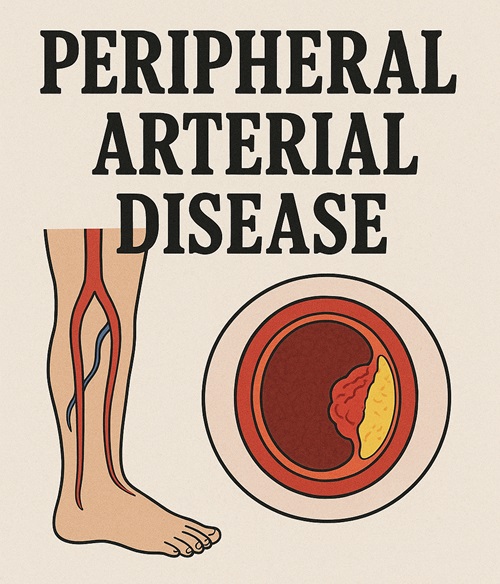
Fatty material may be deposited in the arteries which can lead to a narrowing or “stenosis” and thereby reduces blood supply to the legs. Alternatively, the wall of the artery may become weakened and stretched. This swelling which can burst is referred to as an aneurysm. Aneurysms most often occur … What can happen to the arteries?Read more
What is peripheral arterial disease?
Diseases of the arteries are common; the best known is coronary artery disease. This is the narrowing of the coronary arteries which supply blood to the heart and it can lead to a heart attack. The process which causes the arteries to block is called atherosclerosis; fatty substances accumulate in … What is peripheral arterial disease?Read more
What of the future?
Great strides are being made by researchers in this field of treatment. ‘It is probable that angioplasty performed actually during a heart attack can limit the amount of damage which the heart sustains especially if treatment is started early. Doctors are also working on ways of reducing the recurrence of … What of the future?Read more