There is no certain way of preventing heart attacks with drugs. The two most important ways of reducing the risk of a heart attack are not to smoke and not to be overweight. There is, however, no good or proven way in which drugs can help you stop smoking or … Drugs to prevent heart attacksRead more
What is Anti-clotting drugs
e.g., warfarin When blood clots form within the blood vessels they cause problems. a leg vein, causing swelling. An”arterial thrombosis” is a clot in an artery A “venous thrombosis” is a clot in a vein – this may happen, for example, in the circulation to lodge elsewhere; this is called … What is Anti-clotting drugsRead more
What is Antiarrhythmic drugs
e.g., amiodarone, beta-blockers, digoxin, disopyramide, flecainide, mexiletine, tocainide, verapamil. Sometimes the heart beats too fast, usually because of an abnormal pattern of conduction across the heart, and often the best treatment is with a drug. The heart is its own time-keeper, and each beat is normally signalled by one specialised … What is Antiarrhythmic drugsRead more
Beta-blockers are used to treat
(1) Angina. -Beta-blockers help to prevent angina on exertion or stress by reducing the work done by the heart. (2) High blood pressure. -Beta-blockers are widely used for lowering high blood pressure, though the way they work is still not fully understood. Treatment is commonly combined with diuretics. (3) Abnormal … Beta-blockers are used to treatRead more
What is Beta-blockers
ege, acebutolol, atenolol, labetalol, metoprolol, nadolol, oxprenolol, pinderlol, propranolol, sotalol, timolol. These widely prescribed drugs “block” or reduce the action of adrenaline and related hormones in increasing the heart rate and the strength of the heart-beat and they will, therefore, slow the heart rate. Exercise or excitement increases the secretion … What is Beta-blockersRead more
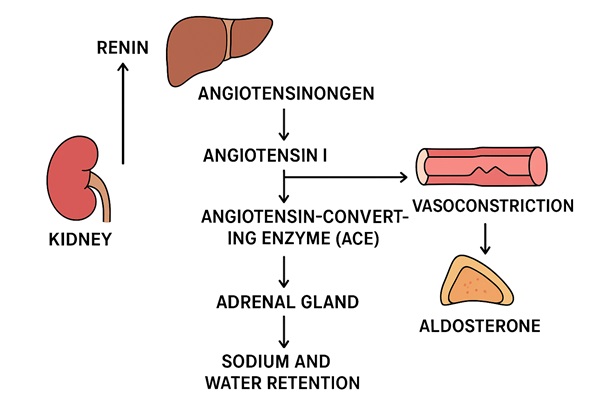
Angiotensin converting enzyme (ACE) inhibitors
Angiotensin Converting Enzyme (ACE): Definition:Angiotensin Converting Enzyme (ACE) is a key enzyme in the renin-angiotensin-aldosterone system (RAAS) — a hormonal system that regulates blood pressure, fluid balance, and electrolyte levels. It plays a vital role in cardiovascular and kidney function by converting angiotensin I (an inactive peptide) into angiotensin II … Angiotensin converting enzyme (ACE) inhibitorsRead more
Different types of vasodilators
(1) Nitrates: e.g., glyceryl trinitrate, isosorbide dinitrate/mononitrate These dilate both arteries and veins, and are the longest established drugs for the treatment of angina. (2) Calcium antagonists: e.g., nifedipine, verapamil, diltiazem These drugs interfere with the movement of calcium into muscle cells, so reducing the strength of contraction both of … Different types of vasodilatorsRead more
Vasodilators are used to treat
(1) Heart failure. -In severe heart failure the arteries and arterioles may be more constricted than they need be, increasing the work load on the heart. Arterial vasodilators can then help by directly reducing the resistance against which the heart has to pump. Venous vasodilators (venodilators) help the veins carry … Vasodilators are used to treatRead more
What is Vasodilators
e.g., nitrates, calcium antagonists, angiotensin converting enzyme inhibitors, hydralazine, prazosin. Put simply, vasodilators widen or open up blood vessels. With each heart-beat blood is pumped out into the large elastic arteries. These branch into smaller and smaller vessels called arterioles which convey it into the muscles and internal organs before … What is VasodilatorsRead more
Diuretics are used to treat
(1) Heart failure-which simply means a reduction in the reserve capacity of the heart. This may be caused by a faulty valve in the heart, or by a weakening … Diuretics are used to treatRead more